Welcome to SISTER'S CUISINE a Best Quality Recipe's Platform
CHANE KI DAL HALWA
- Home
- Desi Recipe's
- CHANE KI DAL HALWA
Chane Ki Dal Halwa
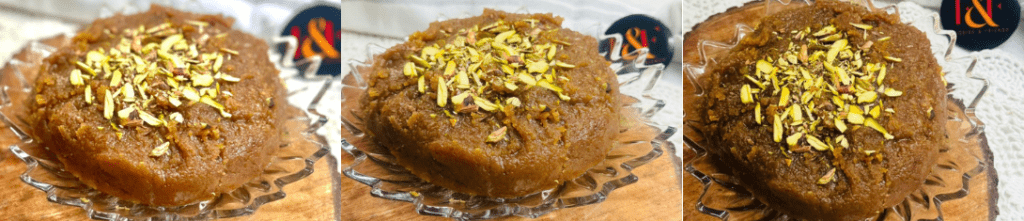
Step into the world of truly royal South Asian desserts with this authentic, time-honored recipe for Chane Ki Dal Halwa. This is not a quick sweet; it is a rich, slow-cooked delicacy—a Mithai—that is famous for its dense, nutty flavor and a beautifully daane daar (grainy) texture that simply melts in your mouth.
If you are looking for the ultimate centerpiece for festivals, weddings, or any special gathering, mastering this Chana Dal Halwa is a must. It is a testament to the art of patience in the kitchen, where time is the essential ingredient that transforms simple split gram into an unparalleled dessert.
Why This Halwa Is a Culinary Treasure :
The unparalleled richness of this Halwa is achieved through a meticulous, time-honored process that results in a flavor far deeper and more complex than quick-cook alternatives.
The Base: Split Bengal Gram (Chana Dal) is soaked, cooked, and ground into a smooth, creamy paste.
The Bhunai (The Secret): The magic lies in the long, patient slow-roasting (bhunai) of the dal paste in copious amounts of pure ghee (clarified butter). This process ensures the Halwa develops its deep golden color, incredible aroma, and characteristic grainy, non-sticky texture.
Aromatic Finish: The Halwa is gently sweetened and infused with aromatic notes of crushed cardamom and rich milk or khoya (reduced milk solids), then garnished heavily with sliced nuts.
This is a labor of love dessert, where patience during the bhunai stage is key to success.
Ingredients
1 cup (200g) Chana Dal (Split Bengal Gram)
1 cup (200g) Sugar (adjust to taste)
3/4 to 1 cup Pure Ghee (Clarified Butter)
1 cup Milk (Whole Milk recommended)
1/2 tsp Cardamom Powder
A few strands of Saffron (optional, soaked in a tablespoon of warm milk)
1/2 cup Khoya / Mawa (reduced milk solids, crumbled) – Optional, but highly recommended for richness
2 Tbsp Sliced Almonds and Pistachios for garnish
Instructions
Step 1: Prep the Dal
Soak: Wash the Chana Dal thoroughly and soak it in enough water to cover it by an inch for at least 6-8 hours or overnight.
Cook: Drain the soaked dal. Pressure cook the dal with about 1/2 cup of fresh water for 2-3 whistles, or boil in a saucepan until it is just tender but still holds its shape. It should not be mushy.
Grind: Drain any excess water completely. Let the cooked dal cool slightly, then grind it in a food processor or blender to a smooth, thick paste. Do not add water while grinding.
Step 2: The Critical Bhunai (Slow Roasting)
Heat the Ghee: In a heavy-bottomed pan or kadhai, heat 1/2 cup of the Ghee over medium heat.
Start the Roast: Add the Chana Dal paste to the hot ghee. Reduce the heat to low-medium.
The Patience Game: This is the most important step. Stir the Halwa continuously and patiently. It will first look wet and sticky, but as the water evaporates and the Halwa cooks, it will slowly change texture.
The Change: Keep roasting for about 25-40 minutes (time varies) until the Halwa turns a deep golden color, smells intensely nutty (like toasted nuts), and has a beautiful, grainy (daane daar) texture. It will start to separate and release the ghee. If the mixture looks dry, add the remaining 1/4 cup of Ghee.
Step 3: Sweetening and Finishing
Add Flavor: Once the bhunai is complete, add the Cardamom Powder and the soaked Saffron (if using). Stir well.
Sweeten: Add the Sugar and mix thoroughly. The Halwa will become liquid again as the sugar melts.
Bind: Now, add the Milk and the crumbled Khoya (if using). Stir and cook the mixture on low heat, stirring continuously until the Halwa thickens again and starts leaving the sides of the pan (the final bhunai stage). The Halwa should form a cohesive mass.
Serve: Transfer the Halwa to a serving dish. Garnish generously with sliced Almonds and Pistachios. Serve warm.
Nabila’s Kitchen Notes :
The Ghee Test: When the Halwa is perfectly roasted, it will stop sticking to the pan and the ghee will visibly separate and pool around the edges. This is your sign that the bhunai is complete!
The Khoya Factor: Adding Khoya elevates the Halwa to a truly rich, celebratory dessert, giving it that classic Bazaar (store-bought) taste. If you don’t have it, you can simply use a little extra milk, but the flavor will be slightly different.
Storage: Chane Ki Dal Halwa keeps wonderfully in an airtight container in the refrigerator for up to a week. You can gently reheat it before serving.
FUEL THE FLAVOR LEGACY:
Your engagement is the essential force sustaining this rich, authentic culinary journey. If this recipe has inspired your cooking, we wholeheartedly invite you to partner with our mission. Every Like, Share, and Subscription actively strengthens our capacity to document, teach, and transmit the generational cooking methodologies of our mothers to a global audience. We sincerely thank you for investing in the Sister’s Cuisines movement.
LET’S BUILD A GLOBAL TABLE!:
We welcome you to share your kitchen creations! Your cooking success and feedback are the core inspiration for every dish we create.
Follow the flavor and connect with us:
MORE BLOGS!
- Chane Ki Dal Halwa: The Ultimate Festive Mithai (A Royal, Slow-Cooked Delicacy)
- Bhindi Gosht: The Secret to Non-Slimy Perfection (A Comfort Curry Masterclass)
- Spicy Crab Masala: A Feast of Flavor with Secret Special Spices
- Green Garlic Pickle (Lehsun ka Achar): Your Quick & Tangy Winter Relish!
- Hari Mirch Chicken Qeema: The Ultimate Green Chili Mince (A Weeknight Delight)
- Deghi Style Mutton Qorma (Velvety, Aromatic, and Rich)
- Easy and Delicious Chicken Salami Recipe
- Desi Indian Moong Dal Recipe – Comforting, Healthy, and Authentically Desi
- Hyderabadi Nizami Chicken – Royal Desi Recipe with a Touch of Humor